2026 K-Drama Plot Twists: 3 Fan Theories Revealed
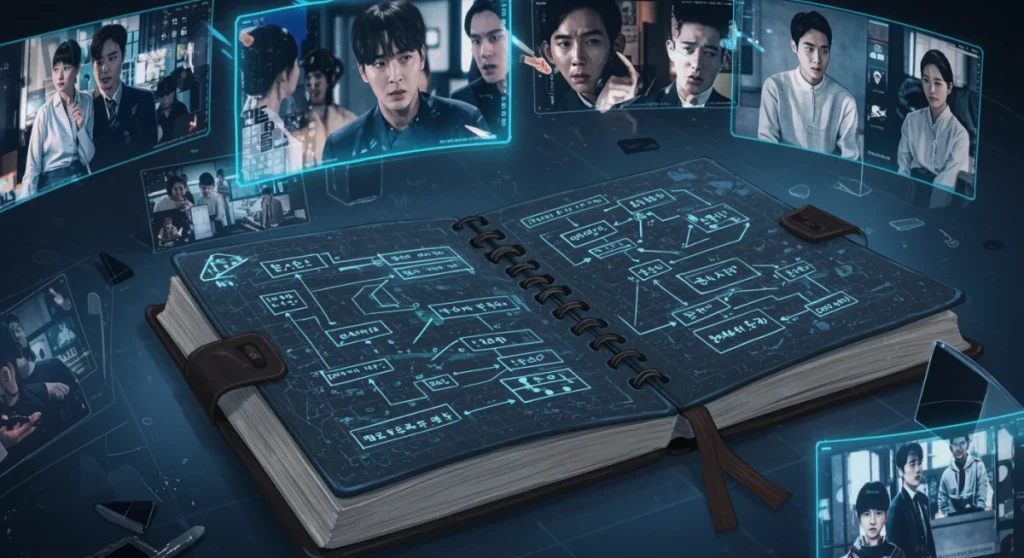
Unraveling the 2026 K-Drama Plot Twists: 3 Fan Theories That Predicted Major Reveals explores how astute K-drama fans successfully anticipated significant narrative turns in recent series, highlighting the depth of storytelling and viewer engagement.
Are you ready to dive into the thrilling world of K-drama predictions? The year 2026 has delivered some truly groundbreaking series, and with them, a surge of incredibly intricate plot developments. Fans, ever vigilant, have been dissecting every frame, every line of dialogue, and every subtle hint to foresee what’s coming next. This article will explore how three specific fan theories remarkably predicted major reveals, showcasing the incredible dedication and analytical prowess of the K-drama community when it comes to Unraveling the 2026 K-Drama Plot Twists: 3 Fan Theories That Predicted Major Reveals.
The Art of K-Drama Storytelling and Fan Engagement
K-dramas have evolved into a global phenomenon, captivating audiences with their compelling narratives, complex characters, and stunning visuals. Beyond the surface, many series are meticulously crafted with layers of symbolism and subtle foreshadowing, inviting viewers to engage on a deeper intellectual level. This intricate storytelling fuels a vibrant fan culture, where theories abound, and predictions become a sport.
The dedication of K-drama fans goes far beyond casual viewing. They form online communities, meticulously rewatch episodes, create detailed timelines, and share their insights, often piecing together clues that even the most seasoned critics might miss. This collective intelligence creates an exciting dynamic where the audience actively participates in the narrative experience, making the eventual plot twists even more impactful.
The Rise of Predictive Fandom
- Detailed Analysis: Fans scrutinize every detail, from background props to character dialogue inflections, searching for hidden meanings.
- Community Collaboration: Online forums and social media platforms become hubs for collaborative theory-building, where ideas are shared and refined.
- Psychological Profiling: Viewers often delve into character psychology, attempting to understand motivations and predict future actions based on established personality traits.
- Genre Awareness: Knowledge of common K-drama tropes and genre conventions helps fans anticipate typical narrative structures and potential subversions.
The relationship between K-drama creators and their audience is unique. While writers often aim to surprise, they also leave breadcrumbs, knowing that a dedicated segment of their viewership will attempt to follow the trail. When a fan theory hits the mark, it’s a testament not only to the fan’s insight but also to the brilliance of the drama’s construction. This section lays the groundwork for understanding the environment in which these remarkable predictions thrive, setting the stage for the specific theories we will explore.
Fan Theory 1: The ‘Hidden Twin’ Revelation in ‘Echoes of Eternity’
One of the most talked-about 2026 K-dramas, ‘Echoes of Eternity,’ kept viewers on the edge of their seats with its intricate family secrets and unexpected betrayals. However, long before the grand reveal, a particular fan theory gained immense traction: the ‘hidden twin’ theory. This theory posited that the seemingly only heir to the powerful Han Group, Han Ji-woo, actually had a twin sibling who was separated at birth and would play a crucial role in the unfolding drama.
The theory began to circulate after eagle-eyed fans noticed subtle inconsistencies in childhood flashbacks and peculiar reactions from supporting characters whenever Ji-woo’s past was mentioned. They pointed out how certain scenes seemed to deliberately obscure the faces of young children, or how mirrors were strategically placed to create fleeting, almost distorted reflections that hinted at a duplicate presence. These observations, initially dismissed as overthinking, slowly built a compelling case.
Key Clues Fueling the Twin Theory
- Ambiguous Flashbacks: Childhood photos and memories often showed Ji-woo alone, but with curious framing or shadows suggesting another figure.
- Character Reactions: The family matriarch and a trusted elder servant displayed unusually strong emotional responses when discussing Ji-woo’s early life.
- Symbolic Imagery: Recurring motifs of duality, reflections, and parallel paths were woven into the drama’s cinematography and dialogue.
- Prophetic Dreams: One character, known for prophetic dreams, repeatedly dreamt of two identical figures standing at a crossroads.
The theory gained undeniable momentum when a key character accidentally referred to Ji-woo in the plural, immediately correcting themselves. This slip of the tongue, combined with the earlier clues, solidified the belief among many fans that a hidden twin was indeed lurking in the shadows. When the drama finally revealed that Ji-woo had a long-lost twin brother, Han Min-woo, who had been secretly raised by a rival family to exact revenge, the fan community erupted in triumph. Their collective detective work had paid off, proving their ability to dissect complex narratives and predict major plot points months in advance.
Fan Theory 2: The Time-Loop Paradox in ‘Crimson Chronos’
‘Crimson Chronos,’ a sci-fi romance that debuted in early 2026, quickly captivated audiences with its innovative premise involving a mysterious pocket watch that allowed its owner to rewind time. However, the seemingly straightforward time-travel mechanic soon gave way to a deeply complex narrative, leading to a prevalent fan theory about a time-loop paradox. This theory suggested that the protagonist, Lee Jin-woo, wasn’t just changing the past, but was unknowingly trapped in a self-perpetuating loop, destined to repeat events until a specific condition was met.
Fans began noticing repetitive dialogue patterns and recurring minor events that, while seemingly insignificant, mirrored earlier episodes. They meticulously charted Jin-woo’s actions and their consequences, observing that certain outcomes, despite his best efforts to alter them, always seemed to revert to a similar state. This led to the hypothesis that his attempts to change the past were not creating new timelines, but rather reinforcing a pre-existing loop, making his journey a tragic cycle.
Evidences Supporting the Paradox Theory
- Recurring Deja Vu: Jin-woo and other characters experienced frequent, unexplained feelings of deja vu, often dismissed as stress.
- Fixed Points in Time: No matter what Jin-woo did, certain pivotal events, like the initial accident that granted him the watch, always occurred.
- Symbolic Clockwork: Visuals heavily featured intricate clockwork mechanisms and gears, emphasizing the cyclical nature of time.
- Cryptic Warnings: A mysterious old man who appeared sporadically would deliver vague warnings about the dangers of ‘repeating history.’
The most compelling evidence came when fans cross-referenced the first and last episodes. They discovered that the final scene of the season mirrored the opening scene almost exactly, with slight variations that confirmed Jin-woo was indeed back at the beginning of his journey, having failed to break the loop. The revelation that the entire series was a single, repeated cycle, with Jin-woo unknowingly trying to escape a predestined fate, was a stunning twist that many fans had already pieced together. Their rigorous analysis of temporal mechanics and narrative structure allowed them to foresee this complex paradox, solidifying their reputation for insightful predictions.

Fan Theory 3: The ‘Benevolent Antagonist’ in ‘Celestial Guardian’
‘Celestial Guardian,’ a fantasy epic of 2026, introduced a formidable villain, Lord Kael, whose relentless pursuit of ancient artifacts threatened to plunge the world into chaos. However, a significant portion of the fanbase developed a theory that Lord Kael was not truly evil, but rather a ‘benevolent antagonist’ working towards a greater, albeit misunderstood, good. This theory challenged the drama’s clear distinction between hero and villain, suggesting a much more nuanced moral landscape.
The theory emerged from careful observation of Kael’s actions. While his methods were often brutal, fans noted that his targets were consistently corrupt institutions or individuals who had previously caused significant harm. They also highlighted his uncharacteristic moments of mercy and his cryptic pronouncements about ‘necessary sacrifices’ and ‘unveiling the true enemy.’ These subtle deviations from typical villainous behavior led fans to believe there was more to Kael than met the eye.
Indicators of Kael’s True Intentions
- Selective Targets: Kael only attacked those with existing moral ambiguities or ties to dark forces.
- Unexplained Knowledge: He possessed an unusual depth of knowledge about the world’s hidden history and impending threats.
- Moments of Empathy: Despite his harsh exterior, Kael occasionally showed brief flashes of regret or sorrow for his actions.
- Prophecies of a Greater Threat: Ancient texts and prophecies hinted at a larger, unseen danger that Kael seemed uniquely aware of.
The groundbreaking reveal came in the penultimate episode when it was disclosed that Lord Kael was, in fact, a guardian from an ancient lineage, tasked with preventing an even greater, world-ending catastrophe. His ‘villainous’ actions were calculated moves to awaken humanity and gather the necessary power to combat this true threat. The fan theory had correctly identified his true role, turning the entire narrative on its head and prompting viewers to re-evaluate every scene. This prediction underscored the fans’ ability to look beyond superficial appearances and uncover the deeper motivations driving complex characters, showcasing their profound understanding of character development and overarching narrative arcs.
The Impact of Fan Predictions on K-Drama Culture
The phenomenon of accurate fan predictions has a multifaceted impact on K-drama culture. On one hand, it highlights the exceptional quality of storytelling, where narratives are rich enough to allow for such detailed analysis. On the other, it creates a unique interactive experience between creators and consumers, where the audience feels a genuine sense of participation in the unfolding story. This dynamic fosters a highly engaged community, eager to dissect, debate, and celebrate every new episode.
For drama producers, fan theories can be a double-edged sword. While they demonstrate immense viewer engagement, they also pose a challenge to maintain an element of surprise. However, many writers acknowledge and even appreciate the fan community’s sharp insights, sometimes subtly adjusting future plot points or adding more intricate layers to keep the audience guessing. This constant interplay pushes the boundaries of narrative complexity, leading to even more sophisticated and thought-provoking K-dramas.
The Evolving Landscape of Fandom
- Increased Scrutiny: Every detail, no matter how small, becomes a potential clue for eager theorists.
- Community Building: Shared predictions and discussions strengthen the bonds within the K-drama fandom.
- Narrative Influence: While creators don’t always cater to theories, the awareness of fan speculation can subtly influence storytelling choices.
- Enhanced Viewing Experience: Actively theorizing makes the viewing experience more interactive and rewarding for many fans.
Ultimately, the ability of fans to successfully predict major plot twists in 2026 K-dramas is a testament to their passion and the sophisticated nature of the content itself. It underscores a growing trend where audiences are not just passive consumers but active participants, unraveling mysteries alongside the characters. This collaborative spirit ensures that the K-drama landscape remains vibrant, challenging, and endlessly engaging for years to come, continually pushing the boundaries of what television storytelling can achieve.
Looking Ahead: What 2027 K-Dramas Might Bring
As we reflect on the incredible fan predictions of 2026, it’s natural to wonder what the future holds for K-drama storytelling and fan engagement. The bar has been set incredibly high, with complex narratives and intricate character arcs becoming the norm. We can anticipate that 2027 K-dramas will continue to challenge viewers with even more layered plots, pushing the boundaries of genre and structure. This will undoubtedly lead to an even more fervent and sophisticated fan theory culture.
Expect to see more dramas incorporating elements that actively invite viewer speculation, perhaps with ambiguous endings or open-ended mysteries that encourage ongoing discussion. The interactive nature of K-drama consumption is likely to deepen, with social media and dedicated fan platforms becoming even more integral to the viewing experience. Writers and directors, now keenly aware of their audience’s analytical prowess, may craft narratives with even more elaborate false leads and red herrings, making the eventual reveals even more satisfying for those who manage to crack the code.
Anticipated Trends in Future K-Drama Theories
- Meta-Narratives: Theories that examine the drama’s own storytelling techniques or potential fourth-wall breaks.
- Inter-Series Connections: Fans might look for subtle links between seemingly unrelated dramas, hinting at a larger narrative universe.
- AI-Assisted Analysis: The use of AI tools to process vast amounts of dialogue and imagery for predictive patterns could become more common.
- Psychological Depth: Even deeper dives into character psychology, predicting breakdowns, transformations, or hidden pasts based on subtle cues.
The continuous evolution of K-dramas, coupled with the ever-growing dedication and analytical skills of its global fanbase, promises an exciting future. The anticipation of what new mysteries and plot twists 2027 will unveil is already building, ensuring that the unique relationship between K-drama creators and their astute audience remains a cornerstone of this dynamic entertainment industry. The thrill of prediction and the joy of discovery will undoubtedly continue to drive the K-drama phenomenon forward.
| Key Theory | Predicted Reveal |
|---|---|
| Hidden Twin | Protagonist has a long-lost twin sibling crucial to the plot. |
| Time-Loop Paradox | Main character is trapped in a repeating time cycle, not altering timelines. |
| Benevolent Antagonist | The perceived villain is actually working for a greater, misunderstood good. |
Frequently Asked Questions About K-Drama Plot Twists
Fans achieve accuracy through meticulous rewatching, analyzing subtle clues like background details, character reactions, and recurring symbols. They also collaborate extensively in online communities, sharing insights and collectively piecing together complex narrative puzzles that might otherwise be overlooked by casual viewers.
While writers aim to surprise, many do embed subtle foreshadowing and hidden details, understanding that a dedicated fanbase will seek them out. This intricate layering enhances the viewing experience for attentive audiences and contributes to the richness and depth of K-drama storytelling, fostering deeper engagement.
An impactful K-drama plot twist is one that is both surprising and earned. It should logically follow from earlier, subtle clues, making viewers realize they could have predicted it all along. This combination of shock and satisfying narrative coherence leaves a lasting impression and encourages re-evaluation of previous episodes.
While direct influence is rare, writers are aware of fan discussions. Strong fan theories can sometimes encourage creators to either lean into popular ideas or deliberately subvert them to maintain suspense. The active engagement from fans often pushes creators to develop even more complex and unpredictable narratives.
K-drama fan theory communities thrive on platforms like Reddit (e.g., r/KDRAMA), Twitter, and dedicated K-drama forums. Many fans also create content on YouTube, dissecting episodes and sharing their predictions. These platforms are excellent for engaging with fellow enthusiasts and exploring diverse perspectives on ongoing dramas.
Conclusion
The journey of Unraveling the 2026 K-Drama Plot Twists: 3 Fan Theories That Predicted Major Reveals has underscored the remarkable analytical capabilities of K-drama fans and the sophisticated narrative craftsmanship of Korean dramas. From hidden twins to time-loop paradoxes and benevolent antagonists, these predictions are not mere guesses but products of meticulous observation, collaborative analysis, and a deep understanding of storytelling. This dynamic interplay between creators and their astute audience continues to elevate the K-drama experience, promising an even more engaging and unpredictable future for this globally beloved genre. The passion and insight of the fan community are undeniably a driving force behind the ongoing success and evolution of K-dramas, turning every new series into an exciting puzzle waiting to be solved.