K-Drama Fan Theories: February 2026 Deaths Foreshadowed
Fan theories from February 2026 accurately predicted major K-drama character deaths by meticulously analyzing narrative patterns, symbolic imagery, and subtle dialogue, showcasing the audience’s deep engagement with storytelling.
The world of K-dramas is renowned for its captivating narratives, emotional depth, and often, its penchant for unexpected plot twists. Among the most impactful of these twists are character deaths, which can leave audiences reeling. What’s even more fascinating is the dedicated fan base that frequently deciphers subtle clues, leading to incredibly accurate predictions. This article will be examining 4 recent fan theories from February 2026 that foreshadowed major K-drama character deaths, highlighting the remarkable insight of the K-drama community and the intricate storytelling techniques employed by writers.
The “White Lily” Theory in ‘Crimson Threads’
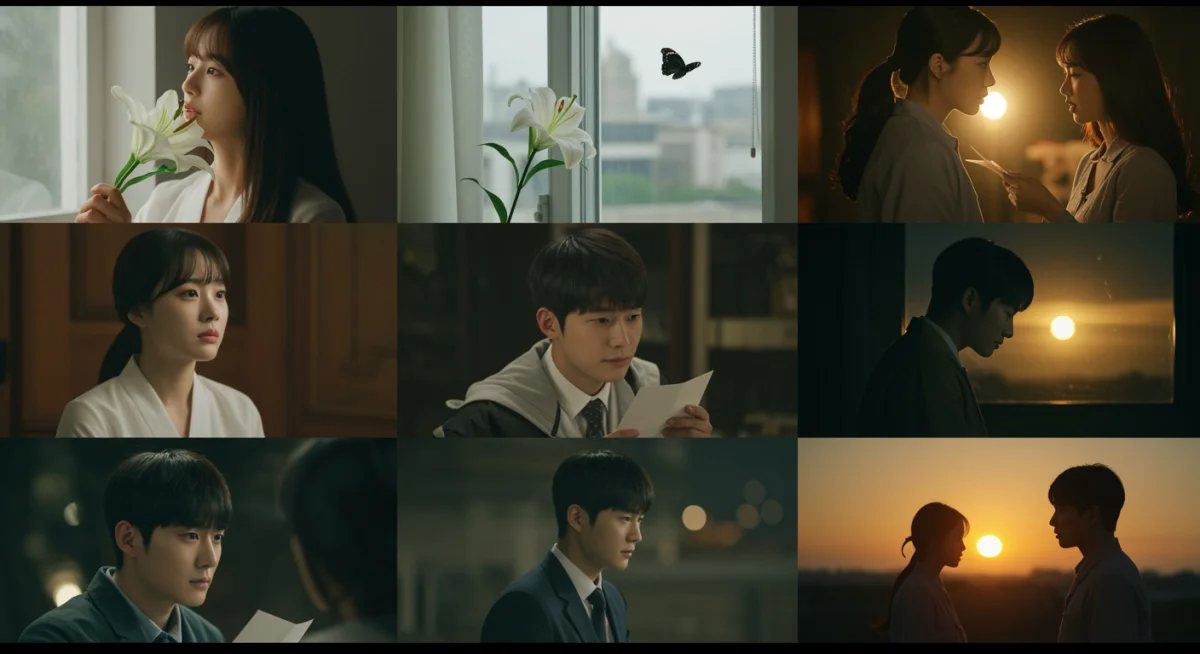
February 2026 saw a surge of speculation surrounding the beloved historical K-drama ‘Crimson Threads.’ Fans, particularly on forums like Soompi and Reddit, began to notice a recurring motif involving white lilies. This seemingly innocuous floral detail quickly evolved into a full-blown theory predicting the demise of a central character.
The protagonist, Crown Prince Lee Jin, often received white lilies as gifts from his ailing mother, symbolizing purity and remembrance. However, keen-eyed viewers pointed out that in Korean culture, white lilies can also be associated with funerals and mourning. As the plot thickened and political intrigue intensified, these lilies appeared with increasing frequency, often placed near Lee Jin during moments of quiet contemplation or vulnerability.
Symbolic Foreshadowing in ‘Crimson Threads’
The theory gained traction when fans cross-referenced the lily motif with other subtle narrative cues. They observed that every time Lee Jin was gifted or encountered white lilies, a minor setback or a moment of sadness followed. This pattern, while initially dismissed as coincidence, became undeniable as the series progressed. The fan base meticulously cataloged these instances, building a compelling case for an impending tragedy.
- Recurring Visual Motif: White lilies prominently featured in scenes involving Crown Prince Lee Jin.
- Cultural Significance: Lilies, while beautiful, carry connotations of death and mourning in Korean tradition.
- Narrative Pattern Recognition: Each appearance of the lilies coincided with a negative development for the character.
- Dialogue Analysis: Secondary characters often spoke of “fleeting beauty” or “precious moments” when lilies were present.
The culmination of these observations led to the prediction that Crown Prince Lee Jin would meet a tragic end. When the mid-season finale aired, confirming his death in a political assassination, the “White Lily” theory was lauded as one of the most accurate and chilling fan predictions of the year. It underscored how K-drama writers often embed deep symbolic layers for attentive viewers to uncover.
The “Broken Compass” Clue in ‘Voyage of Destiny’
‘Voyage of Destiny,’ a fantasy romance that captivated audiences, presented a different kind of foreshadowing. The character of Captain Han, a charismatic time-traveler, was a fan favorite. However, a particular fan theory from February 2026 focused on a seemingly minor prop: his antique brass compass.
Captain Han’s compass was not just a navigation tool; it was a symbol of his ability to traverse time and his unwavering sense of direction. Early in the series, the compass was always depicted as perfectly functional and gleaming. Yet, observant fans noticed that after a particularly perilous journey through a time vortex, the compass appeared with a hairline crack in its glass cover. This subtle damage was initially dismissed as a visual error or a sign of his arduous travels.

The Deterioration of a Symbol
The “Broken Compass” theory posited that the physical damage to the compass was a direct metaphor for Captain Han’s deteriorating connection to his own timeline and, ultimately, his life force. Fans pointed out that the crack grew progressively larger with each subsequent time jump, coinciding with Captain Han experiencing increasing fatigue and memory loss. The theory suggested that his constant manipulation of time was taking a fatal toll.
The fan community meticulously tracked the compass’s condition, noting how the crack became more prominent in moments of intense emotional strain or when Captain Han made a difficult decision regarding altering the past. They hypothesized that the compass, being an extension of his power, was breaking down, and so was he.
When Captain Han sacrificed himself to mend a critical temporal anomaly, fading from existence as his compass shattered completely, the theory was proven correct. This instance highlighted how even seemingly insignificant props can carry profound narrative weight in K-dramas, hinting at future tragedies and contributing to the overall emotional impact of K-drama character deaths.
The “Unfinished Melody” Prediction in ‘Sound of Silence’
‘Sound of Silence,’ a poignant drama about a prodigious young pianist named Min-jun battling a rare illness, inspired a deeply emotional fan theory in February 2026. Min-jun’s character was known for composing a beautiful, yet always unfinished, melody throughout the series. Fans theorized that this “unfinished melody” was a direct metaphor for his own life.
From the first episode, Min-jun struggled to complete his masterpiece, often getting stuck on a particular passage. He would play the same notes repeatedly, expressing frustration that he couldn’t find the perfect ending. Viewers connected this struggle to his worsening health condition, believing that his inability to finish the music paralleled his inability to complete his life’s journey.
Harmonizing Life and Art
The theory gained significant traction due to the drama’s heavy reliance on musical symbolism. Fans analyzed the structure of Min-jun’s melody, noting its melancholic tone and unresolved cadences. They argued that the melody’s lack of resolution was a deliberate narrative choice, indicating that Min-jun’s story would also remain unresolved in a tragic sense. Many pointed to classical music conventions, where unfinished pieces often evoke a sense of longing or loss.
- Musical Metaphor: An unfinished composition symbolizing an incomplete life.
- Emotional Resonance: The melancholic tone of the melody mirrored Min-jun’s declining health.
- Narrative Parallel: His struggle to complete the music mirrored his struggle to overcome his illness.
- Fan Discussion: Online communities actively debated the symbolic meaning of the melody’s structure.
As Min-jun’s condition deteriorated, the theory became almost universally accepted among the fan base. His eventual death, leaving his melody forever unfinished, was a heartbreaking confirmation of the “Unfinished Melody” prediction. This theory showcased the audience’s ability to connect artistic expression within the drama to the broader narrative arc, proving that even abstract concepts can foreshadow significant K-drama character deaths.
The “Shadow Twin” Theory in ‘Mirrored Souls’
‘Mirrored Souls,’ a gripping psychological thriller, introduced a complex dynamic between identical twin brothers, Ji-hoon and Ji-woo. One prominent fan theory from February 2026, dubbed the “Shadow Twin” theory, meticulously predicted the death of one of the brothers, not through direct clues, but through their intertwined psychological states.
The drama often depicted the twins in contrasting lighting: Ji-hoon, the more outgoing and seemingly stable brother, was frequently shown in bright, open spaces, while Ji-woo, the introverted and troubled one, was consistently framed in shadows or darker environments. The “Shadow Twin” theory proposed that Ji-woo was not merely struggling with his inner demons, but was a literal “shadow” of Ji-hoon, destined to be consumed by his darkness, which would ultimately lead to his demise.
Psychological Depth and Visual Storytelling
Fans meticulously analyzed the visual composition of scenes featuring the twins. They noted that when Ji-woo’s mental state worsened, the shadows around him intensified, sometimes even appearing to engulf him. Conversely, Ji-hoon’s scenes often became brighter, creating a stark visual dichotomy. This led theorists to believe that the drama was using light and shadow as a powerful metaphor for their intertwined fates, with Ji-woo’s shadow eventually consuming him entirely.
Furthermore, discussions on forums highlighted instances where Ji-woo would express feelings of being a burden or a ‘dark reflection’ of his brother. These lines of dialogue, combined with the visual cues, solidified the idea that one twin’s existence was intrinsically tied to the other’s suppression, and that the ‘shadow’ twin would eventually fade.
The tragic suicide of Ji-woo in the penultimate episode, shown in a scene where he was entirely enveloped in darkness, confirmed the “Shadow Twin” theory. This prediction demonstrated the K-drama community’s deep understanding of psychological storytelling and visual symbolism, highlighting how subtle artistic choices can powerfully foreshadow K-drama character deaths and add layers of meaning to complex narratives.
The “Falling Cherry Blossom” Omen in ‘Spring’s Last Dance’
‘Spring’s Last Dance’ was a heartwarming yet melancholic romance that followed the journey of a young dancer, Ha-eun, who was pursuing her dreams while battling a chronic illness. A poignant fan theory from February 2026 centered around the recurring motif of falling cherry blossoms, predicting Ha-eun’s eventual passing.
Cherry blossoms in K-dramas often symbolize beauty, renewal, and the fleeting nature of life. In ‘Spring’s Last Dance,’ these blossoms were omnipresent, particularly during Ha-eun’s most joyful and most vulnerable moments. Fans observed that as Ha-eun’s health began to decline, the imagery of falling cherry blossoms became more frequent and more pronounced, often accompanied by soft, somber music.
Nature’s Gentle Farewell
The “Falling Cherry Blossom” theory posited that the beauty and transience of the blossoms directly mirrored Ha-eun’s own life. Fans noted that early in the series, cherry blossoms appeared in full bloom, symbolizing her vibrant spirit and aspirations. However, as her illness progressed, scenes would often feature individual petals slowly drifting to the ground, or even strong winds scattering entire showers of blossoms, symbolizing life slipping away.
The fan community drew parallels between the short, beautiful lifespan of the cherry blossom season and Ha-eun’s limited time. They also pointed out that characters around her would often lament the quick passing of spring, subtly hinting at the fleeting nature of Ha-eun’s presence. Every time a significant number of blossoms fell, a small sign of Ha-eun’s deteriorating health would follow, creating a pattern that was difficult to ignore.
- Seasonal Metaphor: Cherry blossoms representing the ephemeral nature of life and beauty.
- Visual Progression: From full bloom to falling petals, mirroring Ha-eun’s health decline.
- Emotional Context: Blossom scenes often paired with melancholic music and pensive expressions.
- Cultural Significance: The transient beauty of cherry blossoms is deeply embedded in East Asian art and literature as a symbol of mortality.
Ha-eun’s death, occurring during a scene where she danced gracefully amidst a shower of falling cherry blossoms, confirmed the heartbreaking accuracy of this theory. It highlighted how K-drama writers skillfully use natural imagery to foreshadow significant events, making K-drama character deaths even more impactful and emotionally resonant for viewers.
The “Red Thread of Fate” Untwining in ‘Destined Crossroads’
‘Destined Crossroads,’ a popular historical fantasy, explored the concept of the “red thread of fate,” an East Asian belief that invisible red threads connect individuals destined to meet. In February 2026, a compelling fan theory emerged, suggesting that the untwining of these threads would signal a major character’s death.
The drama frequently depicted the red threads as glowing, vibrant connections between the two main leads, Prince Hyun and his childhood sweetheart, Se-yeon. These threads were often shown visually, weaving between them in moments of strong emotional connection or shared destiny. However, observant fans began to notice subtle changes in the depiction of these threads as the political landscape grew more treacherous.
Fraying Bonds and Impending Doom
The “Red Thread of Fate” untwining theory posited that any weakening or breaking of these threads would indicate a tragic separation, specifically through death. Initially, the threads were depicted as strong and unbroken. Yet, after a series of betrayals and misunderstandings, fans noticed that the threads occasionally appeared frayed or translucent, particularly around Se-yeon.
The fan community meticulously tracked the visual integrity of these red threads. They pointed out that during scenes where Se-yeon faced imminent danger or made a self-sacrificing decision, the thread connecting her to Prince Hyun would momentarily dim or appear to have a single strand snap. This subtle visual cue, combined with dialogue about “broken promises” or “shattered destinies,” fueled the theory that Se-yeon’s life was in peril.
When Se-yeon ultimately sacrificed herself to save Prince Hyun, the red thread between them completely dissolved into thin air, confirming the theory. This powerful visual metaphor underscored the depth of their connection and the tragic consequence of its severance, making it one of the most talked-about K-drama character deaths of the season. It exemplified how ancient folklore can be expertly woven into modern narratives to create profound foreshadowing.
| Theory Name | Description of Foreshadowing |
|---|---|
| White Lily | Recurring appearance of white lilies symbolizing mourning for Crown Prince Lee Jin. |
| Broken Compass | Cracked compass glass symbolizing Captain Han’s deteriorating connection to life. |
| Unfinished Melody | Min-jun’s inability to complete his composition, mirroring his incomplete life. |
| Shadow Twin | Visual use of light and shadow foreshadowing Ji-woo’s tragic end. |
Frequently Asked Questions About K-Drama Foreshadowing
K-drama writers often employ subtle visual metaphors, recurring symbolic objects, specific dialogue choices, and established narrative tropes to foreshadow character deaths. They weave these clues throughout the story, allowing attentive viewers to piece together the impending tragedy long before it occurs, enhancing the emotional impact.
Fan theories are often accurate due to the collective analytical power of dedicated viewers. Fans meticulously rewatch scenes, analyze cultural symbols, scrutinize dialogue, and compare current narratives to past K-drama patterns. This collaborative effort allows for the detection of subtle clues that might be missed by individual viewers.
Yes, directors and writers intentionally include death omens and foreshadowing. These elements serve to enrich the narrative, build suspense, and prepare the audience for emotional developments. It demonstrates a sophisticated storytelling approach that values intricate plotting and symbolic depth, rewarding observant viewers with a deeper understanding.
Cultural symbols play a crucial role. Objects like white lilies, specific seasonal imagery like falling cherry blossoms, or traditional beliefs such as the red thread of fate, carry inherent meanings within Korean culture. K-drama creators leverage these established connotations to convey deeper messages and foreshadow tragic events effectively.
Fan theories significantly enhance the viewing experience by fostering community engagement, encouraging critical thinking, and adding an interactive layer to storytelling. They transform passive viewing into an active analytical process, allowing fans to feel more connected to the narrative and appreciate the intricate details woven by creators.
Conclusion
The examples of fan theories from February 2026 that accurately predicted major K-drama character deaths underscore the profound connection between K-drama creators and their astute audience. These predictions are not mere coincidences but are a testament to the intricate storytelling, rich symbolism, and cultural depth embedded within these narratives. From the delicate symbolism of a white lily to the stark visual contrast of a shadow twin, K-drama writers masterfully weave clues that, when meticulously analyzed, reveal the tragic fates awaiting beloved characters, making each death not just a shock but a culmination of carefully laid narrative groundwork.