Unveiling Character Motivations in 2026 K-Dramas: An Insider Look at 4 Fan Theories Explaining Complex Backstories
The world of K-Dramas has always been a captivating tapestry of intricate plots, emotional depth, and unforgettable characters. As we delve into the landscape of 2026 K-Dramas, the narratives are becoming even more sophisticated, with character motivations often shrouded in mystery, driving viewers to dissect every scene, every line, and every reaction. This quest for understanding fuels the vibrant community of K-Drama enthusiasts who, through meticulous observation and passionate discussion, craft ingenious fan theories. These theories don’t just fill in gaps; they often provide profound insights into the complex backstories that shape our beloved characters, offering layers of interpretation that even the creators might not have explicitly intended. Understanding K-Drama character motivations is key to truly appreciating these masterpieces.
From historical epics to futuristic thrillers, the K-Drama industry continues to push boundaries, presenting us with protagonists and antagonists whose actions are rarely black and white. Their decisions are often rooted in deep-seated traumas, unfulfilled desires, or hidden agendas, making the exploration of their psyches an endlessly fascinating endeavor. In 2026, we’ve seen a remarkable surge in dramas that challenge conventional storytelling, demanding a more active and analytical audience. This article aims to explore four compelling fan theories that have emerged from the current K-Drama season, shedding light on the intricate web of K-Drama character motivations and the complex backstories that define them. These theories offer a testament to the power of collective analysis and the profound impact these stories have on their audience.
Join us as we peel back the layers of these captivating narratives, examining how these fan-generated hypotheses enrich our viewing experience and deepen our understanding of the characters we’ve come to love, hate, and empathize with. Through this exploration, we hope to highlight the artistry behind crafting such complex personalities and the dedication of the fans who tirelessly work to uncover their deepest secrets. The discussion around K-Drama character motivations is more vibrant than ever.
The Psychology of Power: Unraveling the Anti-Hero’s Past
One of the most recurring and fascinating archetypes in 2026 K-Dramas is the anti-hero, a character whose morally ambiguous actions often serve a greater, albeit personal, purpose. Their journey is rarely straightforward, marked by difficult choices and a past steeped in hardship. Fan theories surrounding these characters often delve into their formative years, seeking to understand the crucible that forged their complex personalities. The primary K-Drama character motivations for these figures are often revenge, redemption, or a twisted sense of justice.
Consider the character of Lee Jin-woo from the critically acclaimed drama "Crimson Legacy." Jin-woo is introduced as a ruthless corporate raider, seemingly driven by insatiable greed. However, a popular fan theory suggests that his cutthroat business tactics are a calculated effort to dismantle a corrupt conglomerate responsible for his family’s ruin years ago. This theory posits that his seemingly cold demeanor is a facade, a necessary shield to protect himself from emotional vulnerabilities that could compromise his mission. Fans point to subtle clues: his aversion to luxurious living despite his immense wealth, his quiet acts of charity under anonymous names, and his intense focus on specific, seemingly unrelated companies that, upon closer inspection, have historical ties to the conglomerate he’s targeting. This theory completely recontextualizes his K-Drama character motivations.
This "revenge-driven altruism" theory gains traction when examining flashbacks where a young Jin-woo is shown witnessing his parents’ despair after a corporate betrayal. The theory argues that his current actions are not about personal enrichment but about righting a deep-seated wrong, ensuring that no one else suffers the same fate his family did. His complex backstory, therefore, isn’t just a tragic element but the very engine that drives his present-day actions. This depth makes him not just an antagonist, but a tormented protagonist in his own right, leading viewers to root for his success despite his morally questionable methods. The discussion around his K-Drama character motivations has been particularly robust online.
Another example comes from "The Architect’s Secret," where the enigmatic architect, Kang Min-joon, designs structures that are both breathtakingly beautiful and eerily desolate. His aloofness and refusal to form personal connections have led fans to speculate about his past. A dominant theory suggests that Min-joon suffers from a rare form of architectural synesthesia, where he experiences intense emotional pain from structural imperfections. This condition, according to the theory, stems from a traumatic event in his childhood involving a collapsing building, leading him to obsess over perfection and isolate himself to avoid sensory overload. His K-Drama character motivations are thus rooted in a unique neurological condition.
This theory explains his meticulous nature, his seemingly irrational outbursts over minor design flaws, and his preference for minimalist, almost sterile environments. It transforms him from a merely eccentric genius into a character struggling with a debilitating condition, whose passion for architecture is both a blessing and a curse. His desire for perfect structures isn’t just about aesthetics; it’s a desperate attempt to control a world that once felt chaotic and dangerous. The exploration of such a unique backstory enriches our understanding of his K-Drama character motivations, making him a figure of both admiration and pity.
The Echoes of a Forgotten Kingdom: Historical Connections in Modern Settings
K-Dramas have a remarkable ability to weave historical elements into contemporary narratives, often hinting at past lives or ancestral curses that influence present-day events. In 2026, this trend has evolved, with fan theories positing that certain characters are direct reincarnations or descendants carrying the unresolved burdens of their ancient predecessors. These theories add a layer of destiny and fate, explaining seemingly inexplicable connections and powerful, innate abilities.
In the popular fantasy romance "Starlight Serenade," the two main leads, Han Ji-eun and Kim Do-hyun, share an undeniable, almost psychic bond. They often experience shared dreams and have uncanny knowledge of each other’s thoughts and feelings, despite having only recently met. The prevailing fan theory suggests that Ji-eun and Do-hyun are the reincarnations of a legendary royal couple from the Joseon Dynasty, whose tragic love story ended in separation and unfulfilled promises. Their K-Drama character motivations are thus tied to a past life.
This theory is bolstered by several narrative cues: recurring motifs of ancient Korean artifacts appearing in their modern lives, their shared birthmarks that resemble a royal crest, and their inexplicable attraction to specific historical sites. The theory proposes that their current challenges and obstacles are karmic echoes of their past lives, forcing them to overcome the very circumstances that tore them apart centuries ago. Their individual struggles and desires are therefore not just personal; they are part of a larger, fated narrative of reunion and redemption. This interpretation profoundly deepens the understanding of their K-Drama character motivations, transforming a simple romance into an epic tale spanning centuries.
Another intriguing theory arises from "The Scholar’s Secret," a drama set in a prestigious university where students are mysteriously drawn to an ancient library. The character of Professor Lee, a seemingly ordinary history professor, displays an unusual knowledge of forgotten languages and a peculiar melancholic air. Fans theorize that Professor Lee is actually the guardian of the library, a scholar from a forgotten kingdom who has been cursed with immortality to protect ancient knowledge. His K-Drama character motivations are driven by this ancient curse.
This theory explains his ageless appearance, his deep connection to the library’s secrets, and his subtle attempts to guide the students towards uncovering the truth without directly interfering. His melancholic demeanor is attributed to the burden of centuries of solitude and the weight of protecting knowledge that humanity has repeatedly tried to destroy. His actions, from his cryptic advice to his protective instincts towards certain artifacts, are seen as desperate attempts to fulfill his ancient oath. This backstory transforms Professor Lee from a supporting character into a central, tragic figure whose K-Drama character motivations are rooted in a profound sense of duty and sacrifice.
The Unseen Puppet Master: The Hidden Agenda of a Seemingly Minor Character
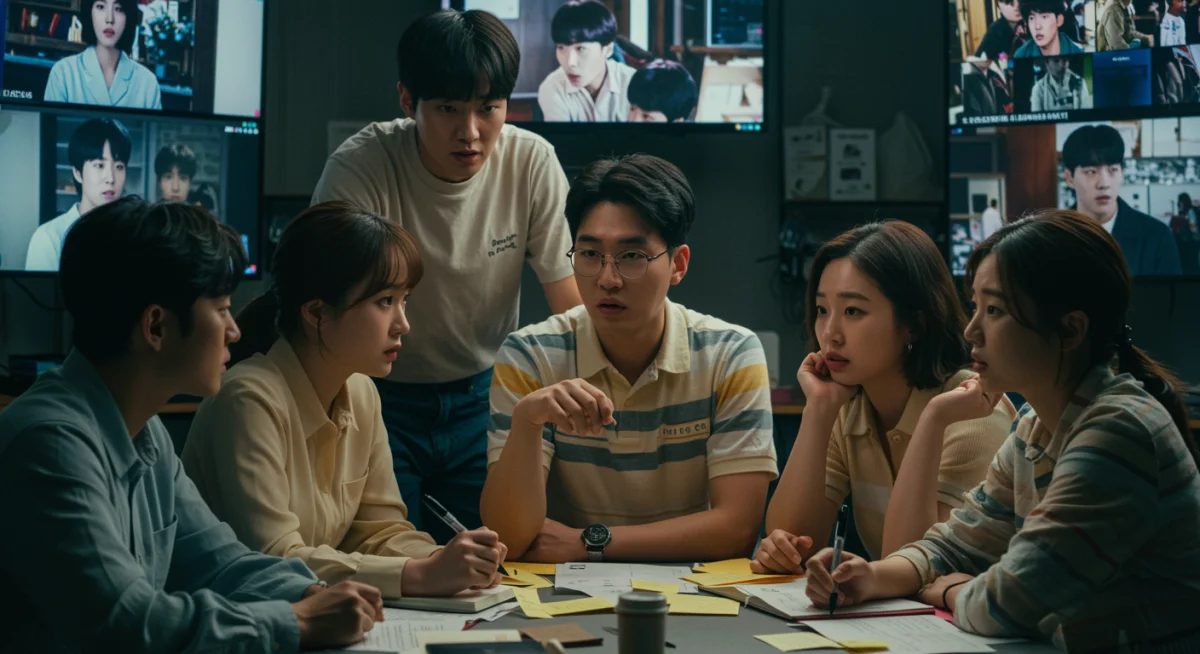
Sometimes, the most impactful K-Drama character motivations belong not to the main protagonists, but to seemingly minor characters who, upon closer inspection, reveal themselves to be the true architects of the plot. These "unseen puppet masters" add layers of intrigue and often lead to shocking revelations that completely redefine the narrative. Fan theories excel at identifying these subtle orchestrators and uncovering their hidden agendas.
In the political thriller "The Shadow Cabinet," the unassuming secretary to the President, Ms. Park, initially appears as a diligent but unremarkable aide. However, a compelling fan theory suggests that Ms. Park is, in fact, the mastermind behind the political machinations plaguing the administration. Her seemingly innocuous actions, like strategically misplacing documents or subtly influencing schedules, are interpreted as calculated moves to destabilize the government from within. Her K-Drama character motivations are shrouded in mystery, but fans believe they are deeply personal.
The theory posits that Ms. Park harbors a deep-seated grudge against the political establishment, stemming from a personal tragedy caused by government corruption years ago. Her quiet efficiency and ability to blend into the background make her the perfect saboteur, operating from the shadows. Fans meticulously track her screen time, noting her almost imperceptible reactions to major plot developments and her strategic placement at critical junctures. This re-evaluation of her role transforms "The Shadow Cabinet" into a much darker, more subversive narrative, with Ms. Park’s seemingly minor role becoming pivotal to understanding the true K-Drama character motivations driving the entire plot.
Another fascinating example comes from the medical drama "Heartbeat Symphony," where the stern and often critical Head Nurse, Choi Eun-kyung, appears to be an obstacle to the younger doctors. However, a popular fan theory suggests that Nurse Choi is secretly testing the moral integrity and resilience of the junior staff, having herself been scarred by past medical malpractice within the hospital. Her K-Drama character motivations are not malice, but a desire for ethical excellence.
This theory is supported by her surprising moments of kindness, her subtle guidance in critical situations, and her intense scrutiny of doctors who prioritize status over patient care. Fans believe her tough exterior is a defense mechanism, a way to ensure that only the most dedicated and ethically sound individuals rise through the ranks. Her backstory, as imagined by fans, involves witnessing a devastating medical error that went unpunished, leading her to dedicate her life to preventing similar tragedies. This interpretation paints Nurse Choi not as an antagonist, but as a silent mentor and guardian, whose seemingly harsh actions are driven by a profound commitment to patient safety and medical ethics. Her K-Drama character motivations are rooted in a desire to protect and guide.
The Paradox of Choice: When Free Will Meets Predetermined Fate
Many 2026 K-Dramas explore the philosophical dilemma of free will versus fate, presenting characters who believe they are making their own choices, only to discover they are part of a larger, predetermined plan. Fan theories in this category often seek to uncover the hidden forces at play, whether cosmic, supernatural, or orchestrated by a powerful, unseen entity. Understanding these forces helps clarify K-Drama character motivations.
In the dystopian sci-fi drama "Chronos Paradox," the protagonist, Lee Soo-jin, believes she is a rebel fighting against a totalitarian regime. However, a complex fan theory suggests that Soo-jin is actually a carefully engineered pawn of the very regime she opposes. The theory posits that her "rebellion" is a sophisticated psychological experiment designed to identify and neutralize potential threats, or perhaps even to control the narrative of dissent. Her K-Drama character motivations, while seemingly self-determined, could be manufactured.
Fans point to the regime’s suspiciously easy "failures" when dealing with Soo-jin, the convenient appearance of resources, and the predictability of her "rebellious" actions. The theory suggests that her memories of past injustices were implanted or subtly manipulated, making her believe in a fabricated fight. This interpretation transforms Soo-jin from a heroic figure into a tragic one, a puppet whose entire existence is a carefully constructed lie. The realization that her deepest K-Drama character motivations might be a product of manipulation adds a chilling layer to the drama, questioning the very nature of free will in a controlled society.
Another compelling theory emerges from the supernatural romance "Moonlit Prophecy," where the female lead, Eun-ji, possesses an inexplicable ability to predict future events, often leading her to make choices that seem counterintuitive but ultimately serve a greater purpose. Fans theorize that Eun-ji is not just a prophetess, but a living embodiment of a prophecy itself, a cosmic agent whose fate is intertwined with the destiny of the world. Her K-Drama character motivations are thus guided by a higher power or an ancient prophecy.
This theory explains her unwavering resolve in the face of adversity, her seemingly detached emotional responses to personal losses, and her uncanny ability to be in the right place at the right time. Her choices are not her own, but rather the unfolding of a predetermined script, with her emotions and desires merely tools to fulfill a grander cosmic design. This perspective transforms Eun-ji from a character with a special ability into a force of nature, a tragic figure whose individual desires are always secondary to the fulfillment of her prophetic role. Understanding these profound K-Drama character motivations adds immense depth to the narrative, making every decision she makes resonate with cosmic significance.
The Weight of Trauma: How Past Scars Shape Present Actions
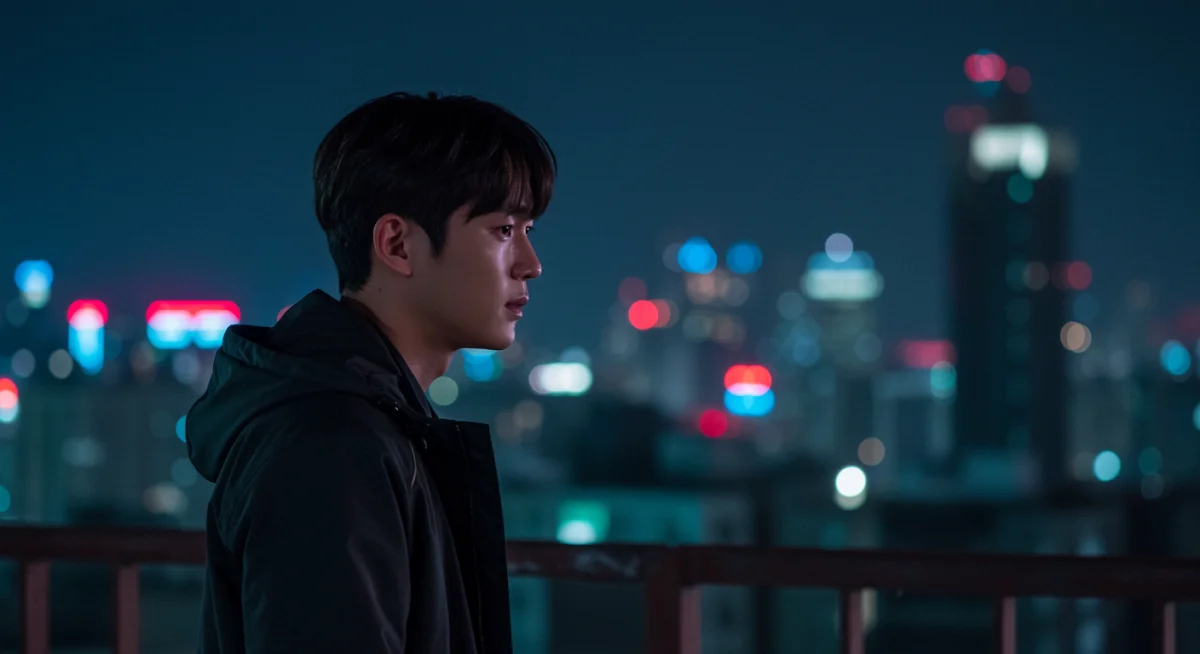
Trauma is a powerful catalyst for K-Drama character motivations, often acting as the invisible hand that guides their actions, decisions, and even their relationships. In 2026 K-Dramas, the exploration of trauma has become increasingly nuanced, leading to fan theories that delve into the psychological impact of past wounds and how they manifest in complex ways.
Take for instance, the intense legal drama "The Unjust Verdict." The prosecutor, Prosecutor Kim, is renowned for his relentless pursuit of justice, often going to extreme lengths to secure convictions, even in seemingly minor cases. A pervasive fan theory suggests that Prosecutor Kim’s unwavering zeal stems from a deeply personal, unresolved trauma involving a miscarriage of justice in his own family’s past. His K-Drama character motivations are rooted in a quest for personal vengeance and systemic reform.
This theory posits that a close family member, perhaps a parent or sibling, was wrongly accused and convicted, leaving a permanent scar on young Kim. His current career path and his almost obsessive dedication to legal fairness are not merely professional ambitions but a desperate attempt to rectify the past, to ensure that no one else suffers the same fate. Fans point to his unusual empathy for victims, his moments of intense anger when confronted with corruption, and his almost self-sacrificial work ethic. This backstory transforms his character from a simple, dedicated prosecutor into a man driven by a profound, personal mission, whose every action is a testament to the enduring weight of past trauma. This understanding of his K-Drama character motivations adds a tragic heroism to his relentless pursuit of justice.
Another compelling theory comes from the psychological thriller "Whispers in the Dark." The protagonist, Seo-yeon, suffers from severe insomnia and vivid nightmares, leading her to question her own sanity. A popular fan theory suggests that Seo-yeon’s mental distress is not merely a symptom of stress, but a manifestation of repressed memories from a traumatic event she witnessed as a child. Her K-Drama character motivations are thus an unconscious struggle to uncover and cope with a hidden past.
The theory suggests that her nightmares are not random, but fragmented pieces of this forgotten trauma, trying to surface. Her seemingly irrational fears and her strong reactions to certain stimuli are interpreted as triggers related to the repressed memory. Fans believe that her journey to uncover the truth is not just about solving a mystery, but about healing herself from a wound she doesn’t consciously remember. This interpretation adds a profound layer of psychological depth to Seo-yeon’s character, making her struggle for sanity a desperate battle to reclaim her past and understand her deeply intertwined K-Drama character motivations. Her quest for answers becomes a journey of self-discovery and healing.
Conclusion: The Enduring Power of Fan Theories in K-Drama Appreciation
As we navigate the rich and complex narratives of 2026 K-Dramas, it becomes clear that the depth of K-Drama character motivations is a cornerstone of their enduring appeal. These fan theories, whether they prove to be true or remain speculative, are invaluable in enriching our viewing experience. They encourage us to look beyond the surface, to question, and to engage actively with the stories unfolding before us. They transform passive viewers into active participants, fostering a vibrant community of critical thinkers and passionate storytellers.
The ingenuity behind these theories not only highlights the intricate writing and character development in K-Dramas but also underscores the audience’s profound emotional investment. By dissecting complex backstories and speculating on hidden agendas, fans contribute to a dynamic and evolving understanding of these narratives, making each rewatch a new discovery. The exploration of K-Drama character motivations is a truly collaborative effort between creators and viewers.
Ultimately, these fan theories serve as a testament to the power of storytelling and the universal human desire to understand the "why" behind actions. As 2026 continues to unfold, we eagerly anticipate more captivating K-Dramas and the brilliant fan theories they will undoubtedly inspire, further deepening our appreciation for the art of character development and the endless possibilities of narrative interpretation. Keep exploring those K-Drama character motivations; they are the heart of these stories.