Unraveling the Enigma: 5 K-Drama Ending Theories That Captivated Fans Recently
K-dramas have a unique way of weaving intricate narratives, developing deeply relatable characters, and often, leaving viewers with endings that spark endless debate and speculation. The beauty of these conclusions often lies not just in their explicit resolution but in the subtle nuances, symbolic gestures, and open-ended possibilities that invite audiences to become amateur detectives, piecing together clues and formulating their own interpretations. Over the past three months, a flurry of captivating K-Drama ending theories has taken the internet by storm, demonstrating the profound impact these stories have on their global fanbase. These theories delve into the hidden meanings, character motivations, and potential alternative realities suggested by the final scenes, transforming passive viewing into an active, engaging pursuit of understanding. From poignant metaphors to intricate plot twists suggested by a single glance or line of dialogue, the community of K-drama enthusiasts thrives on this collective analysis. It’s a testament to the power of storytelling when an ending, whether satisfying or deliberately ambiguous, continues to resonate and generate conversation long after the credits roll. This article will explore five such K-Drama ending theories that have gained significant traction and sparked heated discussions, offering a glimpse into the creative minds of fans and the depth of K-drama storytelling.
The allure of K-drama endings often stems from their ability to challenge audience expectations. Unlike many Western productions that favor explicit closure, K-dramas frequently embrace ambiguity, symbolism, and a reliance on the audience’s emotional intelligence to fill in the gaps. This approach isn’t a flaw; it’s a deliberate artistic choice that fosters a deeper connection between the narrative and its viewers. When a drama concludes, especially one that has meticulously built its world and characters over many episodes, the desire to fully comprehend every detail, every lingering glance, and every unspoken word becomes paramount. This is where K-Drama ending theories truly flourish. They are not merely fan fiction; they are often sophisticated analyses, drawing upon literary theory, psychological insights, and an encyclopedic knowledge of the drama’s own internal logic. These theories can range from grand, overarching interpretations that redefine the entire series to minute observations that uncover a previously unnoticed layer of meaning. The collective intellectual effort of the K-drama community in dissecting these endings is a powerful force, creating a vibrant ecosystem of discussion, debate, and shared discovery. It allows viewers to extend their engagement with the story, transforming the final episode from a conclusion into a new beginning for intellectual exploration. Furthermore, these theories often highlight the brilliance of the scriptwriters and directors, who intentionally embed these layers of meaning, knowing that a dedicated audience will seek them out. The K-Drama ending theories we’ll discuss here are prime examples of this phenomenon, showcasing how a well-crafted ending can continue to captivate and inspire long after its initial broadcast.
Theory 1: The Parallel Universe Hypothesis in ‘A Time Called You’
One of the most talked-about K-Drama ending theories revolves around the hit Netflix series ‘A Time Called You.’ Based on the Taiwanese drama ‘Someday or One Day,’ this time-travel romance left many viewers pondering the true nature of its conclusion. While the drama seemingly offers a happy ending with the protagonists, Jun Hee and Si Heon, reuniting in a new timeline, a significant number of fans have proposed a parallel universe hypothesis. This theory suggests that the final reunion doesn’t occur in a completely erased or ‘fixed’ timeline, but rather in a new, distinct parallel universe created by their actions. The core argument for this K-Drama ending theory lies in specific visual cues and narrative inconsistencies that, according to proponents, cannot be fully explained by a single, linear timeline correction. For example, some fans point to the subtle differences in the characters’ personalities or memories in the final scenes, suggesting that while they are indeed Jun Hee and Si Heon, they are not the *exact* same individuals who endured the previous timelines. The idea is that their consciousnesses or ‘souls’ found their way to new iterations of themselves in a universe where their tragic past never unfolded. This allows for the emotional catharsis of their reunion without completely negating the hardships and growth experienced in the previous, now erased, timelines. The parallel universe theory offers a more nuanced understanding of time travel within the drama’s framework, moving beyond a simple ‘reset’ button. It implies that every journey through time, every attempt to change the past, doesn’t just alter one reality but potentially branches off into countless others. This K-Drama ending theory resonated deeply with viewers who felt that a simple erasure of suffering would undermine the characters’ development. Instead, the parallel universe provides a poetic solution where love transcends dimensions, allowing for a fresh start while implicitly acknowledging the weight of their past experiences. It’s a sophisticated interpretation that adds another layer of complexity to an already intricate plot, keeping ‘A Time Called You’ firmly in the minds of K-drama enthusiasts.
The strength of the parallel universe K-Drama ending theory for ‘A Time Called You’ also lies in its ability to reconcile the bittersweet aspects of time travel. If the past was simply erased, it could be argued that the characters’ struggles and the profound lessons they learned would also be nullified. However, by proposing a new parallel universe, the theory allows for a sense of continuity for their emotional journey, even if the specific events of the past are no longer ‘real’ in the conventional sense. It suggests that the essence of their love and their yearning for each other was potent enough to manifest a reality where they could finally be together, unburdened by the tragedies that plagued their previous existences. This interpretation aligns with the romantic fatalism often found in K-dramas, where destiny plays a significant role, but also acknowledges the power of individual will and sacrifice. The theory gained traction because it provides a more satisfying emotional conclusion for many viewers who felt that the linear ‘fix-it’ ending was too simplistic for such a complex narrative. It transforms the ending from a mere resolution into a philosophical contemplation on fate, free will, and the infinite possibilities of interconnected lives. The debate surrounding this K-Drama ending theory highlights how deeply invested audiences become in the intricate world-building and character arcs presented in these dramas, leading them to seek out explanations that resonate on a profound emotional and intellectual level.
Theory 2: The ‘Dream Sequence’ Interpretation in ‘My Demon’
‘My Demon’ captivated audiences with its unique blend of fantasy, romance, and dark comedy. The ending, which saw the demon Jeong Gu-won regain his powers and reunite with Do Do-hee, was met with mixed reactions. While many celebrated the happy conclusion, a notable K-Drama ending theory emerged suggesting that the entire final sequence, or at least a significant portion of it, was a dream or an elaborate illusion. Proponents of this theory point to the sudden and almost too-perfect resolution after so much struggle and sacrifice. The seamless return of Gu-won’s powers, the ease with which their past issues were resolved, and the seemingly idyllic life they embark on together struck some viewers as suspiciously convenient, almost as if it were a wish fulfillment fantasy rather than a hard-earned reality. Specific visual cues, such as soft lighting, ethereal music, and a slightly detached quality to the characters’ interactions in the final moments, have been cited as evidence for this ‘dream sequence’ K-Drama ending theory. Some even suggest that Do-hee, having made immense sacrifices for Gu-won, might have succumbed to her injuries or faced a more tragic fate, with the happy ending being her subconscious’s way of coping or finding peace. This interpretation adds a layer of poignant tragedy to an otherwise joyful conclusion, hinting at a deeper, more painful reality that the narrative chose to obscure. It challenges viewers to question the nature of reality within the drama and to consider whether the characters truly achieved their happy ever after, or if it was merely a beautiful, fleeting illusion.
The ‘Dream Sequence’ K-Drama ending theory for ‘My Demon’ resonates with a segment of the audience that appreciates a more melancholic or thought-provoking conclusion, even in a romance. It taps into the idea that sometimes, the most beautiful moments are those we conjure in our minds to escape a harsher truth. This theory is often supported by the observation that K-dramas sometimes employ such narrative devices to explore themes of loss, memory, and the power of imagination. If the ending were indeed a dream, it would elevate Do-hee’s character arc, portraying her not just as a survivor, but as someone whose love for Gu-won was so profound that it could create an entire reality for them, even if only within her mind. This interpretation also provides a way to explain away any plot holes or rushed resolutions that some viewers perceived in the final episode, attributing them to the non-linear or illogical nature of dreams. While it’s certainly a more pessimistic view than the intended happy ending, it’s a testament to the drama’s ability to inspire such diverse and complex K-Drama ending theories. It encourages a re-watch with a critical eye, searching for subtle hints that might confirm or deny this intriguing hypothesis. The debate over whether the ending was real or a dream showcases the audience’s desire for narratives that challenge them, even when presented with a seemingly straightforward resolution. It transforms the viewing experience into an active analytical process, where every scene is scrutinized for deeper meaning and hidden implications.
Theory 3: The Cyclical Nature of Fate in ‘Marry My Husband’
‘Marry My Husband’ brought a thrilling revenge fantasy to life, with Kang Ji-won traveling back in time to change her tragic fate. The ending saw her successfully navigate the past, avoid her initial demise, and achieve happiness with Yu Ji-hyuk. However, one prominent K-Drama ending theory suggests a deeper, more philosophical interpretation of the ending: the cyclical nature of fate. This theory posits that while Ji-won successfully altered her *own* timeline and achieved a happy outcome, the universe, or fate itself, still demands a certain balance. Therefore, another individual, perhaps a parallel version of her original self or someone else entirely, might be destined to experience a similar cycle of betrayal and revenge. This K-Drama ending theory doesn’t necessarily mean Ji-won’s happy ending is invalid; rather, it suggests that the core themes of the drama – injustice, betrayal, and the struggle for agency – are universal and perhaps inescapable in a broader sense. Proponents of this theory point to subtle narrative parallels and recurring motifs throughout the series, even after Ji-won’s timeline shift, suggesting that the ‘wheel of fate’ continues to turn, simply affecting different individuals. For example, some viewers speculated that the original Min-hwan and Soo-min might still face a karmic retribution, even if not directly orchestrated by Ji-won in her new timeline. The theory adds a layer of cosmic justice or existential dread to the otherwise triumphant ending, making it a more thought-provoking conclusion. It implies that while individuals can break free from their personal chains of destiny, the underlying forces that create those chains might still exist, waiting to ensnare others. This K-Drama ending theory elevates ‘Marry My Husband’ beyond a simple revenge plot into a meditation on destiny, free will, and the inherent patterns of human experience.
The cyclical nature of fate K-Drama ending theory for ‘Marry My Husband’ is compelling because it provides a framework for understanding the deeper philosophical underpinnings of the show. It suggests that the drama is not just about one woman’s journey of vengeance and redemption, but a broader commentary on the recurring patterns of human behavior and the concept of karma. In many ways, K-dramas often explore these themes, hinting that actions, whether good or bad, have consequences that ripple through time and affect others. By proposing a cyclical fate, this theory acknowledges Ji-won’s triumph while simultaneously suggesting that the fight against injustice is an ongoing one, rather than a singular, definitive victory. It adds a layer of maturity and realism to the fantasy premise, reminding viewers that even in a world where time travel is possible, certain fundamental struggles persist. The discussions around this K-Drama ending theory often delve into questions of moral responsibility, the nature of evil, and whether true justice can ever be achieved on a universal scale. It’s a theory that encourages a more profound engagement with the narrative, inviting viewers to consider the implications of the ending beyond the immediate satisfaction of Ji-won’s personal happiness. This continuous re-evaluation and deeper analysis are precisely what makes K-Drama ending theories so rich and enduring, transforming a completed story into an endless source of contemplation and discussion among its dedicated fanbase.
Theory 4: ‘The Unreliable Narrator’ in ‘Doctor Slump’
‘Doctor Slump’ offered a comforting and healing narrative about two doctors finding solace and love amidst their professional and personal crises. The ending brought them together, seemingly overcoming their struggles. However, a less discussed but intriguing K-Drama ending theory suggests the possibility of an unreliable narrator, particularly concerning one of the main characters’ perspectives. This theory doesn’t necessarily imply a dark or tragic twist, but rather a more subjective and perhaps idealized portrayal of events, especially towards the conclusion. Proponents of this K-Drama ending theory argue that given the characters’ struggles with mental health and self-perception throughout the series, it’s plausible that their final ‘happy’ state is presented through a slightly rose-tinted lens, reflecting their hopeful aspirations rather than an absolute, objective reality. This could manifest in subtle ways: perhaps certain challenges are downplayed, or their healing process is depicted as more linear and complete than it would be in real life. The theory suggests that the drama, in its effort to provide comfort and hope, might be presenting the ending as the characters *wish* it to be, rather than a definitively resolved situation. This K-Drama ending theory aligns with the show’s themes of mental health awareness, acknowledging that recovery is often a continuous journey, not a destination. It invites viewers to consider the subjective nature of happiness and the internal battles that continue even after external conflicts are resolved. By questioning the absolute truth of the ending, the ‘unreliable narrator’ theory adds a layer of psychological depth, encouraging a more empathetic and nuanced understanding of the characters’ ongoing growth.
The ‘Unreliable Narrator’ K-Drama ending theory for ‘Doctor Slump’ is particularly interesting because it doesn’t seek to undermine the happy ending but rather to enrich it with a more realistic and compassionate perspective on mental health. It acknowledges that healing is not a magical cure but a continuous process, and that even in moments of happiness, individuals may still be navigating their internal landscapes. This theory suggests that the drama, through its subtle narrative choices, might be gently reminding the audience that the characters’ journey is ongoing, and their newfound peace is a hard-won state that requires continued effort and self-awareness. It moves beyond a simplistic ‘happily ever after’ to a more mature understanding of human resilience and the complexities of mental well-being. Furthermore, this K-Drama ending theory can be supported by examining the subtle shifts in tone or character introspection during the final episodes. If one character’s perspective dominates the narrative, or if their internal monologues become increasingly optimistic without fully addressing all past traumas, it could be interpreted as a form of self-narration that leans towards idealization. This theory encourages viewers to engage with the characters not just as fictional entities, but as representations of real people facing real struggles, making their eventual moments of peace all the more meaningful because they are understood within a context of ongoing growth. The discussion generated by this K-Drama ending theory highlights the increasing sophistication of K-drama audiences, who are eager to delve into the psychological nuances of their beloved stories.
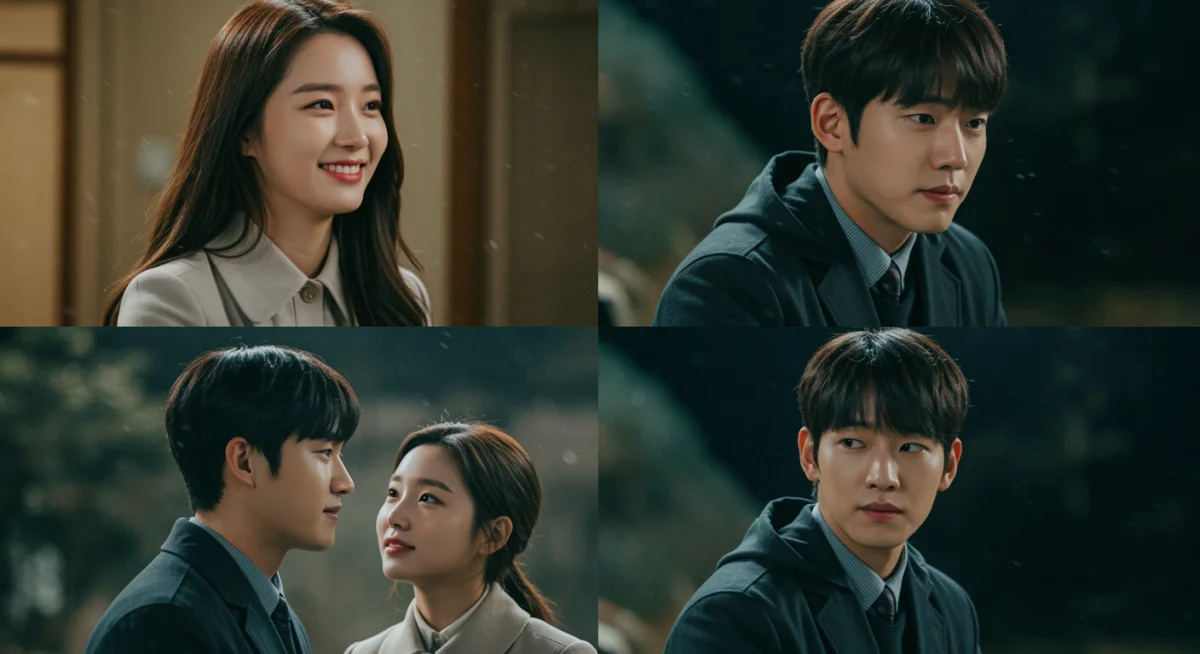
Theory 5: The Metaphorical ‘Island’ in ‘Castaway Diva’
‘Castaway Diva’ told the inspiring story of Seo Mok-ha, a young woman rescued after 15 years on a deserted island, who pursues her dream of becoming a singer. The ending saw her achieve success and find a loving family, a seemingly straightforward happy conclusion. However, a compelling K-Drama ending theory suggests that the ‘island’ itself, or at least its prolonged impact, serves as a powerful metaphor that extends beyond her physical rescue. This theory posits that even after Mok-ha was physically saved, she continued to be metaphorically ‘castaway’ in various aspects of her life, grappling with the psychological scars, the immense catch-up she had to play in society, and the constant feeling of being an outsider. Her journey to becoming a diva, therefore, wasn’t just about achieving a dream but about truly ‘rescuing’ herself from the lingering isolation and trauma of her past. Proponents of this K-Drama ending theory point to her struggles with adjusting to modern society, her unique perspective on life, and her deep-seated anxieties even amidst her success. The ‘island’ isn’t just a place; it’s a state of mind, a burden she carries, and her ultimate triumph is in integrating that experience into her identity rather than erasing it. This interpretation adds a profound layer of psychological realism to the drama, transforming it from a simple rags-to-riches story into a nuanced exploration of post-traumatic growth and resilience. It suggests that the ending, while happy, is also a continuous process of healing and self-discovery, where the ‘island’ remains a part of her, shaping who she is, but no longer defining her in a limiting way.
The metaphorical ‘Island’ K-Drama ending theory for ‘Castaway Diva’ is particularly powerful because it emphasizes the long-term impact of trauma and the continuous nature of healing. It moves beyond the superficial narrative of a girl achieving her dreams and delves into the deeper psychological journey of a survivor. This theory suggests that Mok-ha’s strength isn’t just in her talent, but in her ability to carry her past experiences – the ‘island’ – with her, transforming them into fuel for her art and her life. It’s a more mature and realistic understanding of resilience, where the past isn’t simply forgotten or overcome, but integrated into one’s identity. The theory is supported by the drama’s consistent portrayal of Mok-ha’s unique worldview, her occasional moments of vulnerability despite her outward strength, and her profound connection to the people who understood her past. These elements suggest that the ‘island’ was not merely a plot device for her rescue, but a foundational experience that shaped her entire being. The discussions surrounding this K-Drama ending theory often highlight the drama’s sensitive portrayal of mental fortitude and the enduring power of human connection in overcoming adversity. It encourages viewers to look beyond the surface level of success and appreciate the profound internal battles that characters might still be fighting, even in their moments of triumph. This kind of nuanced interpretation is a hallmark of compelling K-Drama ending theories, allowing for a richer, more empathetic engagement with the stories and their characters.
The Enduring Power of K-Drama Ending Theories
The proliferation of K-Drama ending theories is a testament to the genre’s incredible ability to craft deeply engaging narratives that resonate with audiences on multiple levels. These theories are not just idle speculation; they are products of careful observation, critical thinking, and a profound emotional investment from viewers around the globe. They serve several crucial functions within the K-drama community. Firstly, they extend the life of a drama far beyond its broadcast schedule, keeping discussions active and encouraging re-watches with a fresh perspective. A well-crafted K-Drama ending theory can transform a seemingly straightforward conclusion into a complex puzzle, inviting viewers to delve deeper into the narrative’s intricacies and discover layers of meaning they might have initially missed. This prolonged engagement is invaluable for both the creators, who see their work continue to inspire thought, and for the audience, who find new ways to connect with their beloved stories.
Secondly, these K-Drama ending theories often highlight the brilliance of K-drama writers and directors. Many of these theories uncover subtle clues, symbolic imagery, and deliberate narrative ambiguities that were intentionally woven into the fabric of the story. When fans successfully decode these hidden meanings, it speaks volumes about the sophistication of the storytelling and the trust that creators place in their audience’s intelligence. It reinforces the idea that K-dramas are not just entertainment but often works of art that invite intellectual and emotional participation. The discussions around these theories become a collective celebration of the drama’s craftsmanship, revealing how meticulously every detail, from a character’s costume to a background prop, might contribute to the overarching narrative and its potential interpretations.
Finally, K-Drama ending theories foster a vibrant and interactive community. Online forums, social media platforms, and fan groups become hubs for passionate debates, collaborative analysis, and shared discovery. This collective sense of intellectual curiosity and shared passion strengthens the bond among K-drama enthusiasts, creating a global network of viewers who connect over their love for these stories. It’s in these spaces that diverse perspectives are shared, arguments are honed, and new insights are constantly being generated. The act of theorizing together transforms individual viewing experiences into a communal intellectual endeavor, enriching the overall appreciation of the genre. As K-dramas continue to push boundaries in storytelling, we can expect the landscape of K-Drama ending theories to grow even richer and more diverse, proving that a truly great story never truly ends; it simply evolves in the minds of its captivated audience.
In conclusion, the five K-Drama ending theories discussed – the parallel universe in ‘A Time Called You,’ the dream sequence in ‘My Demon,’ the cyclical nature of fate in ‘Marry My Husband,’ the unreliable narrator in ‘Doctor Slump,’ and the metaphorical island in ‘Castaway Diva’ – are but a few examples of the profound impact K-drama endings have on their viewers. They are a testament to the creativity of fans and the depth of storytelling that defines the genre. These theories not only offer alternative interpretations but also deepen our understanding and appreciation for the intricate narratives and complex characters that K-dramas consistently deliver. As the K-drama world continues to evolve, so too will the fascinating and often brilliant theories that emerge from its passionate fanbase, ensuring that the magic of these stories lives on long after the final credits roll. So, the next time you finish a K-drama, don’t just watch the ending – analyze it, discuss it, and perhaps even contribute your own K-Drama ending theories to the ever-growing conversation!